Physical Therapist Assistant A.A.S.
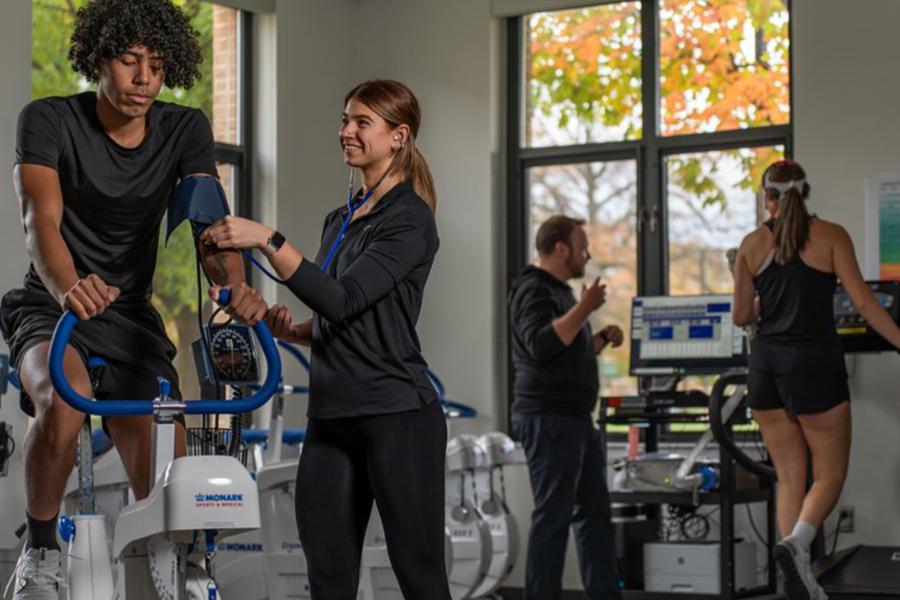
The Physical Therapist Assistant (PTA) A.A.S. program prepares students for careers in physical therapy, combining classroom, laboratory, and clinical training. Graduates are eligible to take the National Physical Therapy Examination and pursue licensure to work under the supervision of a physical therapist in diverse healthcare settings.
Program Information
This is a selective admissions program.
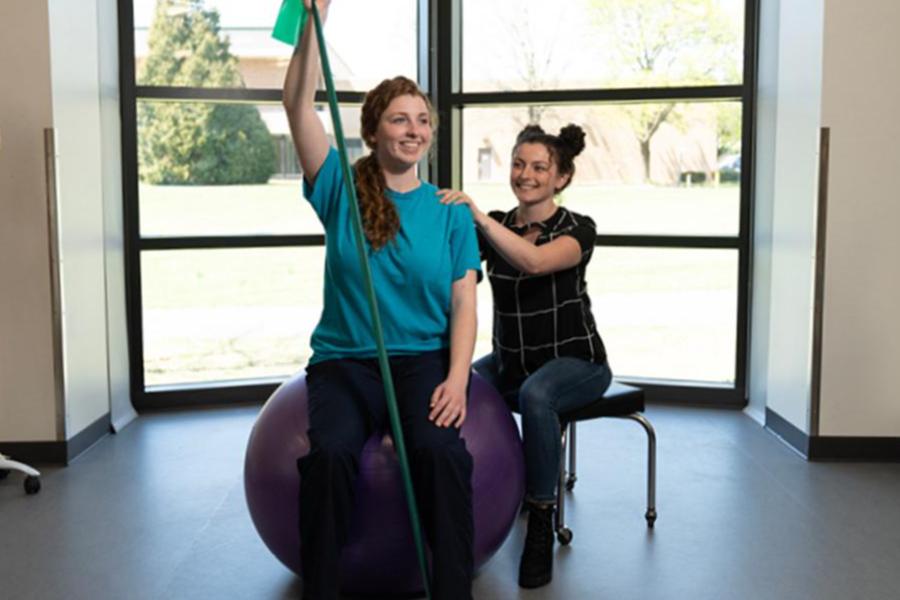
The Physical Therapist Assistant A.A.S. prepares students for a career as a Physical Therapist Assistant (PTA). The PTA is a skilled technical healthcare professional competent in performing selected physical therapy services under the direct supervision of a physical therapist. Physical Therapist Assistants provide a variety of physical therapy techniques, in accordance with the licensing board in the state for which they practice. Physical Therapist Assistants conduct therapeutic exercises, functional trainings, deep soft tissue massages, and other physical modalities such as electrotherapy and ultrasound. A PTA's work is focused on providing therapy for patients who are recovering from injury and illness, enabling patients to regain movement, and manage pain. PTAs work in a variety of settings including hospitals, private practices, outpatient clinics, home health, nursing homes, schools, sports facilities, and more.
Students must earn minimum grades in all courses in the Physical Therapist Assistant program. Contact the program manager for details.
Success in the program is defined by your ability to apply what you’ve learned in real-world scenarios. This program ensures that every student achieves the following core competencies:
- Integrate evidence and demonstrate critical thinking to support clinical decision-making.
- Progress, monitor through data collection, respond to changes, and provide effective interventions for patient management across the lifespan within the scope of Physical Therapist Assistant practice and under the direction of a Physical Therapist.
- Communicate effectively, orally and in writing, with patients, families, and other health care providers.
Success starts with a solid plan. Your program's course sequence is designed to build your skills step-by-step. By following this plan, you ensure you're meeting all program requirements and staying on track.
The pathway for the PTA Program, which includes all pre-requisites, technical education courses, and clinical education experiences is 70 credits across 6 semesters, or approximately two years, including summer semesters. The program has three full time clinical education experiences planned (4 weeks, 5 weeks, and 7 weeks) for an approximate total of 640 contact hours.
The Physical Therapist Assistant A.A.S. program is a selective admissions program. This pathway is for students who have been accepted into the program only. Students who have not yet been accepted into the program should begin the Health Sciences A.S. pathway and apply to the Physical Therapist Assistant A.A.S. after all selective admissions courses have been completed.
The PTA Program Manuals will serve as a valuable reference guide for the program.
Essential Functions for a PTA Career
The PTA program requires prospective students to attest to meeting the essential functions listed below on their application to the PTA program.
Essential Functions are a list of skills that are expected of all physical therapist assistants and should serve as a guideline for professional expectations once the student is employed as a PTA. These essential functions include, but are not limited to, the following:
Communication
Communication skills sufficient to teach others, explain procedures, interact with others, and convey information in writing.
- Obtain and report information verbally and in writing using the English language.
- Receive and respond to verbal and written communications in an appropriate and professional manner.
- Use of communication and sensory skills to convey and elicit information.
- Accurate perception of non-verbal information and cues in interpersonal encounters.
Physical
Physical ability is necessary as a PTA. A PTA must have physical mobility and strength sufficient to work with a variety of patient population. Physical requirements include but are not limited to:
- Fine motor skills sufficient to apply fine motor skills and hand dexterity to safely perform examination and therapeutic interventions.
- Frequently bend, twist, and stoop and occasionally crawl, climb, reach above shoulder level, and kneel.
- Having adequate balance in both standing and walking to be able to also support a patient with a disability.
- Being able to lift and carry up to 50 pounds independently.
- Pushing and pulling heavy or immobile patients – up to 100 pounds independently.
- Physical stamina sufficient to perform client care for entire length of clinical experience (6-8 hours).
Observation
Observation skills are necessary in healthcare. A PTA must be able to observe and monitor patients, caregivers, volunteers, and other medical staff. The essential observation functions require the use of senses. A PTA must be able to:
- Observe movement patterns, activities and behaviors.
- Observe signs related to physical status (e.g. vital signs, symmetry and condition of the skin, soft tissue & wounds)
- Observe signs related to behavioral status
- Read information in clinical environments such as patient medical record, diagnostic tests, dials, displays, and equipment related to patient care.
Behavioral
Behavioral and social attributes in a clinical setting means having the maturity and emotional health to fulfill all responsibilities. Essential behavioral and social functions include:
- Act in an ethical, legal, and responsible manner consistent with the Core Values and Professional Behaviors outlined by the American Physical Therapy Association.
- Engage in patient care to all patient populations including but not limited to children, adolescents, adults, vulnerable adults, or persons with developmental disability.
- Recognize and demonstrate respect for cultural, ethnic, ethical, and value differences among staff, patients, caregivers, and other health care professionals.
- Be able to handle stresses of dealing with physically and emotionally difficult situations, patients, or caregivers.
- Demonstrate flexibility and adaptability to changing situations and uncertainty.
- Emotional stability sufficient to assume responsibility/accountability for actions, provide client with emotional support, adapt to environmental stress, and monitor own emotions.
- Adhere to timeliness and attendance requirements.
Cognitive
Cognitive abilities are necessary for timely problem solving, safety judgment, and reasoning in a clinical setting. The essential cognitive functions include:
- Analytical thinking sufficient to transfer knowledge from one situation to another, problem solve, prioritize tasks, and use long-term and short-term memory.
- Critical thinking ability sufficient to exercise sound judgement through the sequencing of information and the identification of cause and effect relationships
- Assessing self-performance to continually improve professional skills and implement plans for professional growth and development.
Health Requirements
Prospective students need to be aware that physical therapy involves contact with communicable diseases. All students entering the PTA program must meet the following health requirements prior to participating in clinical education experiences:
- TB test or chest x-ray
- Adult Tdap
- Polio primary series or polio booster
- MMR
- Varicella
- Hepatitis B, 3 vaccinations plus a positive titer
- Current flu shot
- COVID-19 vaccine (required by most clinical partners)
Other Requirements
Background Check and Drug Screen
In accordance with the policies of many of our clinical facilities Frederick Community College’s PTA Program requires all students to have a criminal background check and drug screening. This background check and drug screening will be completed PRIOR to enrollment in clinical education experiences (PTHA 180, PTHA 235, PTHA 240) and may be repeated during the program as deemed necessary.
All students must be successfully cleared via this background check and drug screening to be admitted to the clinical facilities. If a student is not successfully cleared, the student may not enter the clinical setting and, therefore, will be unable to complete the PTA Program’s requirements and graduate.
Program applicants are advised that The Maryland Board of Physical Therapy Examiners may deny a license to an applicant who has been convicted of or pleads nolo contendre to a crime involving moral turpitude, whether or not any appeal or other proceeding is pending to have the plea set aside. If prospective students have questions regarding this, they should contact the PT Board of Examiners directly.
CPR
Proof of CPR certification (American Heart Association and Military Training Network course) must be submitted prior to clinical education experiences and maintained while enrolled in the PTA program.
Medical Insurance
All students are required to provide proof of personal health insurance upon admission to the PTA Program. The college and the clinical education experience settings are not responsible for the cost of medical care if the PTA student becomes ill or injured at school or at the medical facility.
Required Videos
These videos will provide you with insight into the PTA career to insure you are making the right choice for your future.
Accreditation Statement
Effective April 30, 2024, the Physical Therapist Assistant program at Frederick Community College is accredited by:
The Commission on Accreditation in Physical Therapy Education (CAPTE)
3030 Potomac Ave., Suite 100
Alexandria, VA 22305-3085
703.706.3245
[email protected]
capteonline.org
Program Feedback
The Physical Therapist Assistant Program engages in continuous and systematic evaluation and improvement. We welcome all comments, suggestions, ideas, and constructive criticism as part of that process. There are written policies and procedures for both students, employees, and the community. Student complaints regarding the PTA program should be addressed according to the Student Complaints Policy and Student Complaints Procedure.
Individuals in the community, clinical instructors, healthcare providers, prospective students or employers of graduates are welcome to provide comments according to the following policy:
- Comments and complaints must be provided in writing and signed by the author. Anonymous submissions will not be acknowledged, nor will written comments provided on behalf of an anonymous source.
- Comments and complaints must be submitted by mail or email to:
- Frederick Community College
Attention: Director of Physical Therapist Assistant Education
Amelia Iams, PT, DPT
7932 Opossumtown Pike
Frederick, MD 21702
[email protected]
- Frederick Community College
- Clinical Instructors (CI) and Site Coordinators of Clinical Education (SCCE) are asked
to initially direct complaints to the Director of Clinical Education using the contact
information below. If adequate response is not received in a reasonable time frame,
the complaint should be directed to the PTA Program Director.
- Frederick Community College
Attention: Director of Clinical Education
Ashley Dicks PT, DPT, CCI
7932 Opossumtown Pike
Frederick, MD 21702
[email protected]
- Frederick Community College
- If the complaint concerns the Program Director, the individual should contact the
Associate Vice President/Dean of Biological, Physical, and Health Sciences.
- Sandy McCombe Waller PhD, PT, NCS
Associate Vice President/Dean of Biological, Physical, and Health Sciences
Frederick Community College
7932 Opossumtown Pike
Frederick, MD 21702
[email protected]
- Sandy McCombe Waller PhD, PT, NCS
- The PTA Program Director shall respond to all comments within seven (7) days after receipt to further discuss and resolve the issue. If satisfactory resolution is not or cannot be reached, appeal may be made to the Associate Vice President/ Dean of Biological, Physical, and Health Sciences.
- The Associate Vice President/ Dean of Biological, Physical, and Health Sciences will not become involved until all attempts to resolve the issue with the Program Director have been exhausted, unless the comment is directly related to the performance of the Program Director.
- Records of all correspondence will be confidentially maintained by the Program Director for Five (5) years. These records are not open to the public.
No retaliation will occur by the college or program due to a complaint being filed.
- Complaints regarding the program’s accreditation status should be addressed to the
Commission for Accreditation for Physical Therapy Education.
- Commission on Accreditation in Physical Therapy Education
3030 Potomac Ave., Suite 100
Alexandria, VA 22305-3085
- Commission on Accreditation in Physical Therapy Education
Mission
The mission of the PTA program of Frederick Community College is to prepare competent and ethical healthcare providers that meet the needs of the community by caring for a diverse patient population under the direction and supervision of a physical therapist. Utilizing a comprehensive curriculum based on contemporary physical therapy practice, program faculty will design and deliver effective learning experiences to help prepare graduates to be culturally competent PTAs who demonstrate a commitment to professionalism, a strong desire to give back to their community and profession, and a commitment to lifelong learning.
Values
- Excellence: Providing educational experiences and programming that reflect high academic standards that will result in excellent healthcare for patients
- Learning: Instilling the commitment to lifelong long learning is necessary in an ever-changing healthcare environment. All health care professionals should continue to strive for new acquisition of knowledge and skills
- Diversity: Respecting and Supporting visible and invisible human differences that affect the way people interact in the environment
- Innovation: Using their critical and problem-solving skills our graduates can be creative in developing their treatment programs to ensure that their patients achieve their personal goals
- Community: Encouraging the engagement of all healthcare providers through communication and collaboration will result in optimal healthcare.
- Integrity: Ensuring fair and ethical healthcare as a right
Information on Tuition, Fees & Scholarships
- FCC Tuition & Fees
- Cost of Attendance
- Scholarships for FCC Students
- Digitally Accessible PTA Financial Fact Sheet
Additional Estimated Expenses
In addition to the tuition and fees charged by the the college, students should plan on the following expenses to complete the program:
| Item | First Year | Second Year |
|---|---|---|
| Books (estimated $150 per course) | $750 | $900 |
| PTHA 101 student fee | $220 | $0 |
| PTHA 105 student fee | $251 | $0 |
| PTHA 113 student fee | $18 | 0 |
| Name Bade for Clinicals | $7 | $0 |
| PTHA 180 student fee | $0 | $20 |
| PTHA 205 student fee | $0 | $60 |
| PTHA 235 student fee | $0 | $175 |
| Student APTA membership (no section dues) | $90 | $90 |
| Total Estimated Costs | $1,336 | $1,245 |
The FCC Physical Therapist Assistant program opened in August 2022. Outcomes required by the Commission on Accreditation in Physical Therapy Education (CAPTE) to be publicly reported include a minimum of: graduation rate, first time licensure exam pass rate, ultimate licensure exam pass rate, and employment rate (all averaged over the most recent two years of the program). The outcomes are listed below.
Goals
- Integrate evidence and demonstrate critical thinking to support clinical decision-making.
- Progress, monitor through data collection, respond to changes, and provide effective interventions for patient management across the lifespan within the scope of Physical Therapist Assistant practice and under the direction of a Physical Therapist.
- Communicate effectively, orally and in writing, with patients, families, and other health care providers
- Function as an entry-level general physical therapist assistant that provides competent skilled therapy services under the direction and supervision of a physical therapist.
- Communicate effectively in a culturally competent manner with other healthcare providers as well as patients from diverse cultural backgrounds.
- Demonstrate of lifelong learning, professional development, and/or community/professional service.
Outcomes
| Year | Graduation Rate | Licensure Pass Rate | Employment Rate |
|---|---|---|---|
| 2024 | 93% | 100% | 100% |
| Admissions Cycle | Students who applied w/ minimum requirements | Students offered a spot in the program | Students who enrolled in the program* |
|---|---|---|---|
| 2022 | 19 | 19 | 17 |
| 2023 | 20 | 20 | 19 |
| 2024 | 29 | 29 | 24 |
*25 seats available per cohort

Health Professions Information Sessions
Considering a career in healthcare?
Join us for a healthcare program information session to explore your options! This is the perfect opportunity to learn about our healthcare
career programs and see our state-of-the-art facilities.
Get Started
Program Facts
Start Here. Go Anywhere.
Credentials
Physical Therapist assistants work in hospitals, outpatient therapy clinics, schools, nursing facilities, research laboratories, rehabilitation centers, and similar practice settings. Upon completion of the PTA A.A.S., students are prepared to take the National Physical Therapy Examination. Students who pass the licensing exam earn credentials to work as a Physical Therapist Assistant.
National Physical Therapy Examination
Connect Your Program to a Career
Explore our Career Communities to see how your program of study translates into real-world opportunities. From specialized resources to professional associations, we’ll help you bridge the gap between the classroom and your career goals.
Get Hired Faster with Handshake
There’s a reason Handshake is the #1 tool for student hiring. Create your profile today to unlock exclusive access to local jobs, internships, and career fairs designed specifically for students like you.
Program Contacts
Faculty
Dr. Amelia Iams
Director of Physical Therapist Assistant Education
[email protected]
301.846.2644
Faculty
Ashley Dicks, PT, DPT, CCI
Director of PTA Clinical Education
[email protected]
301.846.2644
Admissions
Abby Sines
Select Admissions Coordinator
[email protected]
240.629.7950
Financial Aid
Jefferson Hall
3rd Floor
[email protected]
301.846.2620
Related Programs

Clinical Medical Assistant (CMA)
Learn More
Dental Assisting & Oral Radiography
Learn More