Surgical Technology A.A.S.
The Surgical Technology A.A.S. program provides a foundation in surgical principles and hands-on clinical experience. This selective admissions program combines technical and general education coursework, preparing students for careers as surgical technologists and offering pathways to complete the degree while working in the field.
Program Information
This is a selective admissions program.
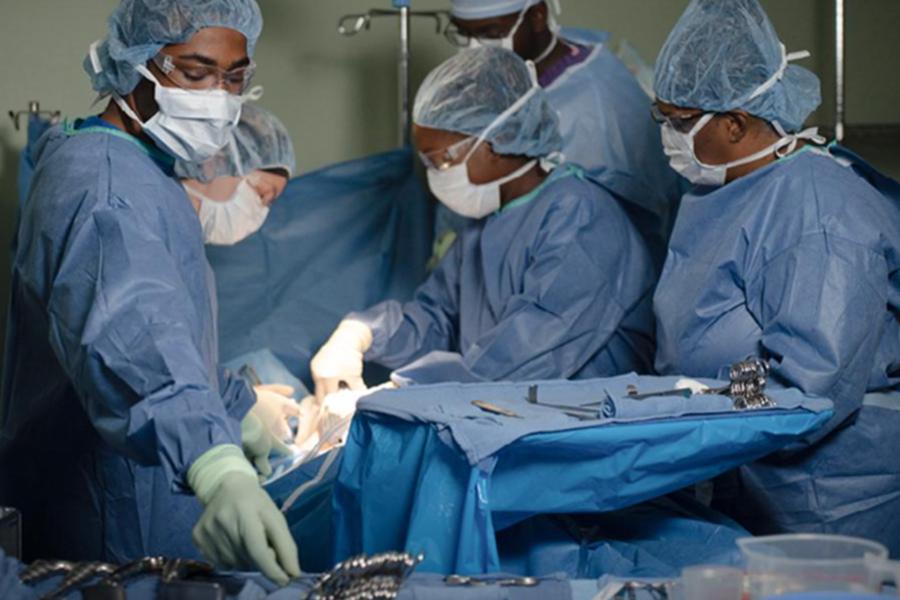
The Surgical Technology A.A.S. provides the theory and skills essential for employment in the profession of surgical technology. The fundamental principles, practices, and protocols are applied during extensive clinical experiences in the operating room environment. Accreditation from the Commission on Accreditation of Allied Health Education Programs (CAAHEP) program graduates to apply for the national certifying examination in surgical technology.
Success in the program is defined by your ability to apply what you’ve learned in real-world scenarios. This program ensures that every student achieves the following core competencies:
- Demonstrate ability to comprehend, apply, and evaluate information pertinent to the practice of surgical technology (cognitive domain).
- Perform, independently, skills required for employment as an entry-level practitioner (psychomotor domain).
- Exhibit professional behaviors consistent with college and employer standards for a surgical technologist (affective domain).
Success starts with a solid plan. Your program's course sequence is designed to build your skills step-by-step. By following this plan, you ensure you're meeting all program requirements and staying on track.
The Surgical Technology program is a selective admissions program. This pathway is for students who have been accepted into the program only. Students who have not yet been accepted into the program should begin the Health Sciences A.S. pathway and apply to the Surgical Technology program after all selective admissions courses have been completed.
Technical Standards
Basic Qualifications for Participation in the Program
Students admitted to the Surgical Technology Program at Frederick Community College must be able to meet the following technical standards with or without reasonable accommodations. These standards are necessary to ensure safe and effective participation in classroom, laboratory, and clinical environments and to protect the health and safety of patients.
Physical and Motor Abilities
Students must be able to:
- Stand, bend, stoop, and/or sit for extended periods of time with limited opportunities for breaks
- Remain in the operating room environment for lengthy surgical procedures
- Lift and carry a minimum of 20 pounds
- Manipulate surgical instruments, supplies, and equipment with speed, dexterity, and coordinated hand–eye movements
- Load fine sutures (e.g., 10-0) onto surgical needles
- Ambulate and move freely within the operating room and clinical environments
- Assist with lifting, moving, positioning, and supporting patients who may be unconscious, with or without assistive devices
Sensory Abilities
Students must be able to:
- Demonstrate sufficient visual acuity to identify anatomical structures, surgical instruments, and components of the sterile field
- Distinguish color, shape, size, depth, and texture of surgical supplies and tissues
- Demonstrate sufficient peripheral vision to safely function within the sterile surgical environment
- Hear and understand verbal communication from members of the surgical team, including muffled communication while masks are worn
- Hear and respond to activation signals and warning alarms on surgical and monitoring equipment
- Detect odors sufficient to maintain environmental and patient safety
Communication Abilities
Students must be able to:
- Communicate effectively and understand fluent English both verbally and in writing
- Understand and respond appropriately to verbal and/or written instructions and requests from faculty, clinical instructors, and members of the surgical team
- Convey information clearly and accurately during patient care and surgical procedures
Cognitive Abilities
Students must be able to:
- Demonstrate short- and long-term memory sufficient to track surgical instruments, supplies, and procedural steps
- Apply critical thinking and sound judgment in the operating room environment
- Anticipate the needs of the surgeon and surgical team during surgical procedures
- Integrate and apply knowledge of medical terminology, anatomy, physiology, microbiology, surgical procedures, and aseptic technique
- Respond appropriately to unexpected changes or emergency situations in the surgical environment
Behavioral and Professional Attributes
Students must be able to:
- Demonstrate emotional stability and professionalism in high-stress clinical environments
- Exhibit respectful and effective interpersonal communication with patients, faculty, staff, and members of the surgical team
- Demonstrate honesty, integrity, and accountability consistent with professional practice
- Utilize positive coping skills when working in stressful environments
- Maintain focus and composure during complex or emergency situations
Health and Safety Requirements
Students must be able to perform assigned duties in a manner that does not compromise
the health or safety of patients, faculty, staff, or other students.
Students must comply with all program and clinical site health and safety requirements,
including:
- Required immunizations and health screenings
- Communicable disease policies
- Substance-free workplace policies
- Clinical site safety protocols
Accommodation Statement
Students who believe they may require reasonable accommodations to meet these technical standards should contact the Frederick Community College Disability Access Services (DAS) Office to initiate the accommodation process. Approved accommodations will be communicated to the program in accordance with college policy.
Attribution
Adapted from: Association of Surgical Technologists (AST). (2002). Core Curriculum for Surgical Technology. AST, Inc.
Occupational Risks
Students admitted to the Surgical Technology Program at Frederick Community College must be informed of the inherent occupational risks associated with the practice of surgical technology. While safety education and protective measures are emphasized, these risks cannot be completely eliminated.*
*Some listed risks only apply to clinical rotations.
Exposure to Infectious and Hazardous Materials
- Exposure to blood, body fluids, and potentially infectious materials
- Risk of exposure to bloodborne pathogens including hepatitis and HIV
- Exposure to and contact with chemicals such as disinfectants, sterilants, medications, and cleaning agents *The surgery lab at FCC only uses mock medications
Sharps and Instrumentation Hazards
- Risk of cuts, punctures, or needlestick injuries from sharp surgical instruments and needles
- Exposure to hazards from handling powered surgical equipment and complex instrumentation
Physical and Ergonomic Risks
- Operating under conditions where prolonged standing, walking, bending, lifting, and repetitive motions are needed
- Risk of musculoskeletal strain or injury related to patient positioning and equipment handling
Environmental and Procedural Hazards
- Exposure to radiation from imaging and diagnostic equipment
- Exposure to surgical smoke (plume), anesthetic gases, and airborne contaminants
- Exposure to noise, bright lighting, temperature fluctuations, and confined workspaces
Psychological and Emotional Stressors
- High-pressure, time-sensitive surgical environments
- Exposure to trauma, critical illness, or death
- Exposure to irregular schedules, early start times, extended shifts, and on-call demands
Other Requirements
Cardiopulmonary Resuscitation (CPR)
Students are required to obtain Basic Life Support CPR certification through the American Heart Association. Please select a course providing both didactic and manikin practice.
Background Checks and Drug Screening
Conviction of a felony or misdemeanor may prohibit placement into a clinical site, applying for a professional license, or acquiring employment as a healthcare professional. Prior to applying for consideration in a healthcare program which requires clinical placement for program completion, please discuss any questions you may have with the program director or manager. Once admitted into the program, students are required to pay for and obtain criminal background checks and drug screening before starting clinical coursework; and random drug screening may occur at any time during clinical experiences.
Health Requirements
Students are required to provide proof of immunity to communicable diseases.
- Documentation of Immunizations and proof of immunity with blood titers - Varicella,
MMR, and Hepatitis B.
- You must go to a laboratory to have bloodwork performed. Your physician provides the order.
- Seasonal flu vaccination (required at all clinical sites) and COVID-19 vaccination (most clinical sites).
- History and physical (H&P) exam to ensure students are fit to perform the essential duties for lab and clinicals. Your physician will complete this.
- Negative two-step PPD or appropriate levels on QuantiFERON gold depending on the clinical
site requirements.
- If there is a history of a positive PPD, then provide a negative chest x-ray.
Graduation Requirements
The student will:
- Meet all academic, financial, and graduation criteria for Frederick Community College. Refer to the current catalog.
- Pass all surgical technology (SURG) courses with a minimum of a “C” grade and pass the clinical component of the courses. With any clinical or didactic failure in the last SURG course, the student may not sit for the national certification examination and may not receive a degree in surgical technology.
- Participate in and document at least 120 surgical procedures according to the latest
criteria found in the Association of Surgical Technology’s Core Curriculum for Surgical
Technology.
- 120 cases required:
- 30 General Surgery:
- minimum 20 1st scrub
- maximum 10 2nd scrub
- 90 in Specialties:
- minimum 60 1st scrub
- maximum 30 2nd scrub
- At least 4 Specialties need to have at least 10 1st scrubs. May count 10 endo. & 5 vaginal deliveries as 2nd scrub
- 30 General Surgery:
- 120 cases required:
The Surgical Technology Student Handbook will serve as a valuable reference guide for the program.
Fall Cohort (Aug-May)
Fall Term
- Lecture: Mondays 2:00 - 5:00 p.m. and Tuesdays 10:00 a.m. - 4:00 p.m. - full term length
- Lab: options available for the daytime or evenings (8:00 a.m. - 8:00 p.m.) every Thursday and Friday - first 10 weeks of the semester
- Clinicals: Wednesday - Friday 6:45 a.m. - 3:30 p.m. - last 5 weeks of the semester
January Term (3 weeks)
- Lecture/Lab: Mondays 10:00 a.m. - 2:00 p.m.
- Clinicals: Tuesday - Friday 6:45 a.m. - 3:30 p.m.
Spring Term
- Lecture: Mondays 10:00 a.m. - 2:00 p.m.
- Clinicals: Wednesday through Friday 6:45 a.m. – 3:30 p.m. - first 10 weeks of the semester
- Lecture ONLY: Mondays and Wednesdays 10:00 a.m. - 2:00 p.m. - last 5 weeks of the semester
Spring Cohort (Jan-Dec)
Spring Term
- Lecture: Mondays 2:00 p.m. - 5:00 p.m. and Tuesdays 10:00 a.m. - 4:00 p.m. - full term length
- Lab: options available for the daytime or evenings (8:00 a.m. - 8:00 p.m.) every Thursday and Friday - first 10 weeks of the semester
- Clinicals: Wednesday through Friday 6:45 a.m. – 3:30 p.m. - last 5 weeks of the semester
Summer Term (3 weeks)
- Lecture/Lab: Mondays 10:00 a.m. - 2:00 p.m.
- Clinicals: Tuesday through Friday 6:45 a.m. – 3:30 p.m.
Fall Term
- Lecture: Mondays 10:00 a.m. - 2:00 p.m.
- Clinicals: Wednesday through Friday 6:45 a.m. – 3:30 p.m. - first 10 weeks of the semester
- Lecture ONLY: Mondays and Wednesdays 10:00 a.m. - 2:00 p.m. - last 5 weeks of the semester
To prepare entry-level surgical technologists who are competent in the cognitive (knowledge), psychomotor (skills), and affective (behavior) learning domains to enter the profession. - March, 2022 (Standard II.A. ARCSTSA)
The Frederick Community College Surgical Technology Program is accredited by:
The Commission on Accreditation of Allied Health Education Programs
9355 - 113th St. N, #7709
Seminole, FL 33775
727.210.2350
caahep.org
upon the recommendation of:
The Accrediting Review Council on Education in Surgical Technology and Surgical Assisting
19751 East Mainstreet, Suite #339
Parker, CO 80138
303.694.9262
arcstsa.org
To find more information about how credits may transfer from Frederick Community College to a state four-year institution visit ARTSYS or consult a College advisor.
Frederick Community College has articulation agreements with the following institutions, allowing students a seamless transfer experience. Students who plan to transfer should speak with an advisor or program manager from their chosen transfer institution before selecting elective courses.
Information on Tuition, Fees & Scholarships
- FCC Tuition & Fees
- Scholarships for FCC Students
- Scholarships for Surgical Technology Students
- Frederick Memorial Foundation Scholarship
- Loats Foundation Scholarship
- Joseph and Margaret Droll Memorial Scholarship
- Association of Surgical Technologists
- National Board of Surgical Technology and Surgical Assisting
Additional Estimated Expenses
In addition to the tuition and fees charged by the the college, students should plan on the following expenses to complete the program:
| Item | Amount | Notes |
|---|---|---|
| Required Program Texts | $250 | Currently, the program textbook is obtained through purchasing a 12-month Cengage Unlimited Membership. |
| Attire: Scrubs (ceil blue), OR appropriate shoes | $30 - $100+ | Required for on-campus labs. Students must purchase their own scrub top(s) and bottom(s) and OR appropriate shoes (no mesh/cloth, must have a back (no clogs/slides). Price is dependent on what the student chooses. |
| Pre-Clinical Screening | Unknown | Admitted students must schedule an appointment before with a healthcare provider to complete pre-clinical screening before the start of the program. Form can be found on Surgical Technology Website. This screening is to obtain permission to perform the duties of a student surgical technology, and obtain proof of immunity to communicable diseases. Cost to the student will be for the office visit, any additional immunizations, and for laboratory services. |
The National Board of Surgical Technology and Surgical Assisting (NBSTSA) Certified Surgical Technologist® (CST®) Exam - Web-Based Test
| Year | Test Takers | First Time | Ultimate |
|---|---|---|---|
| 8/1/2025 - 7/31/2026 | 21 | 90% (19/21) | 95% (20/21) |
| 8/1/2024 - 7/31/2025 | 15 | 67% (1/15) | 73% (11/15) |
| 8/1/2023 - 7/31/2024 | 16 | 69% (11/16) | 75% (12/16) |
| 8/1/2022 - 7/31/2023 | 17 | 88% (15/17) | 94% (16/17) |
| 8/1/2021 - 7/31/2022 | 17 | 71% (12/17) | 82% (14/17) |
Job Placement
| Year | Graduates | % Total |
|---|---|---|
| 8/1/2025 - 7/31/26 |
21 |
100% (21/21) |
| 8/1/2024 - 7/31/2025 | 15 | 93% (14/15) |
| 8/1/2023 - 7/31/2024 | 16 | 100% (16/16) |
| 8/1/2022 - 7/31/2023 | 17 | 94% (16/17) |
| 8/1/2021 - 7/31/2022 | 18 | 100% (18/18) |
While not all graduates pursue immediate employment due to factors such as military relocation or critical personal circumstances, 100% of FCC graduates in the past 5 years who seek positions in the field of surgical technology have successfully secured employment.

Health Professions Information Sessions
Considering a career in healthcare?
Join us for a healthcare program information session to explore your options! This is the perfect opportunity to learn about our healthcare
career programs and see our state-of-the-art facilities.
Get Started
Program Facts
Start Here. Go Anywhere.
Board Certification
Surgical technologists are integral members of the surgical team who work closely with surgeons, anesthesia providers, and nursing staff to ensure safe and efficient surgical procedures. Surgical technologists may work in hospitals, ambulatory surgery centers, labor and delivery units, physician offices, or specialty surgical centers. Upon completion of the program, students are eligible and required to sit for the Certification Examination in Surgical Technology (CST) administered through the National Board for Surgical Technology and Surgical Assisting (NBSTSA).
Connect Your Program to a Career
Explore our Career Communities to see how your program of study translates into real-world opportunities. From specialized resources to professional associations, we’ll help you bridge the gap between the classroom and your career goals.
Get Hired Faster with Handshake
There’s a reason Handshake is the #1 tool for student hiring. Create your profile today to unlock exclusive access to local jobs, internships, and career fairs designed specifically for students like you.
Program Contacts
Faculty
Crystal Shea
Director of Surgical Technology
[email protected]
301.846.2400
Admissions
Abby Sines
Select Admissions Coordinator
[email protected]
240.629.7950
Financial Aid
Jefferson Hall
3rd Floor
[email protected]
301.846.2620
Related Programs
Clinical Medical Assistant (CMA)
Learn More
Dental Assisting & Oral Radiography
Learn More